Table of Contents
Introduction
In today’s digital era, we are witnessing a significant expansion of innovative technologies, whose integration into different sectors continues to grow. It is no different for artificial intelligence, either. Artificial intelligence (AI) components such as deep learning, sensory perception, and adaptability play a considerable role in this digital transformation of our world. AI technologies with its capabilities in advanced data analysis, pattern recognition and rapid adaptive learning over time, often provide a solid foundation for problem-solving and decision-making processes.
Sports medicine focuses on the diagnosis, treatment, rehabilitation and prevention in athletes and physically active individuals. Like in other sectors, AI represents a major change offering promising potential, particularly in the area of training optimization for high performance athletes based on real-time analysis of their biomechanical and physiological data, predictive modeling for injury prevention and enhancement of rehabilitation and recovery processes through personalization based on athlete’s continuous monitoring and feedback. The ability of AI to process and analyze large amounts of data in real time can provide important insights for sports doctors and coaches. This intersection of modern technology and medical care thus brings unprecedented progress in sports medicine (Guelmemi et al., 2023).
At the beginning of this paper, I will focus on the possible means that allow the collection of biomechanical and physiological data, based on which predictive models are then created. Furthermore, I will address three main areas of integrating AI into sports medicine: training optimization, injury prevention and the rehabilitation process.
Optimization of training represents a crucial factor for athletes in building both physical and mental strength and resilience, and ultimately in achieving set goals. In this chapter, I will discuss how AI algorithms create detailed profiles of individual athletes, which then provide coaches with the ability to prepare an individualized optimized training plan for the athlete, including precise values for training duration, intensity and rest days for recovery.
Prevention or early identification of injuries is essential for optimizing an athlete’s performance and ensuring long-term health. Here, I will focus on two main deep learning algorithms: Convolutional Neural Networks (CNN) and Recurrent Neural Networks (RNN) which have made significant progress in the efficient analysis and processing of data to detect patterns and deviations leading to potential injuries (Dhanke et al., 2022).
Towards the end of this paper, I will focus on how rehabilitation has progressed through AI. I will introduce various tools that can achieve faster recovery and an easier return to the training plan, such as predictive analysis for post-surgical rehabilitation, virtual physical therapy assistants, robotic-assisted rehabilitation, augmented reality (AR) in rehabilitation, or the use of AI for cognitive and psychological recovery.
Collection of biomechanical and physiological data
There are various ways to obtain biomechanical and physiological data on athletes, based on which subsequent analysis is conducted. Data can be obtained, for instance, from public sports databases, team or coach databases that track athletes’ performance, or from studies providing data that is then used for research purposes. Another way is to obtain data from wearable technologies or wearable devices, which are experiencing significant progress with the development of AI. These technologies enable real-time tracking and data collection, and consequently, the possibility of immediate response.
Wearable technologies
Wearable technologies, thanks to technological progress, have become a common part of many people’s lives, but especially of elite athletes due to their ability of injury prediction and rehabilitation optimization. Wearable technologies allow real-time feedback based on current health status and provide an objective alternative for monitoring the recovery and rehabilitation process. They thus represent a cheaper alternative compared to the same medical instruments capable of monitoring vital signs. For this reason, as well as due to their hardware capacity and low footprint, their use in sports medicine is continually increasing (Vijayan et al., 2021).
Moreover, these technologies reduce costs for intensive treatment by enabling rehabilitation outside the hospital environment. Over the next 25 years, wearable technologies are expected to flourish further, leading to global costs savings of up to $200 billion and a considerable reduction in interaction between patients and clinical professionals (Vijayan et al., 2021).
Nowadays, we already recognize countless types of wearable technologies. Thanks to the continuous miniaturization of components for these smart devices that we wear, people are no longer limited to just smartphones or traditional smartwatches. It is possible to get smart rings, smart sports shirts, shorts, socks, or other smart elements that can read our physiological and biomechanical data (Mataruna-Dos-Santos et al., 2021). Combined with the corresponding mobile applications, they form the basis for creating an image of the user’s physical condition.
Evolution of capabilities of wearable technologies
At the beginning of the year 2000, wearable technologies started with heart rate monitoring and simple movement tracking. Gradual technological evolution led to the emergence of technologies with much more advanced capabilities using sensors, communication technologies and cloud storage (Mahmood, 2025).
Global positioning system (GPS) technology has become widely used for tracking movement, speed, and distance. Heart rate variability helps monitor the balance between readiness for further physical activity and the primary autonomic system. Accelerometers and gyroscopes that detect motion, external forces, and orientation provide valuable information about an athlete’s biomechanics and overall fatigue. For rehabilitation purposes and training optimization, electromyographic sensors have been developed, allowing the detection of how muscles work under load (Mahmood, 2025). Additionally, these wearable technologies are designed to monitor sleep phases and patterns, respiratory rate, pulse oximetry, stress levels, and body temperature. Based on this data, the current load status of the athlete and readiness for training are determined.
The immense amount of raw data obtained about physical condition is then transformed into very valuable and useful information with the help of AI. As innovation in wearable technologies continues, the infrastructure needed for AI-driven injury prediction and improvement of overall athlete’s performance is being built (DigitalDefynd, 2024).
Optimization of training and athlete’s performance
Optimized training forms the foundation for maintaining long-term physical fitness without injury and achieving athletic successes. It is a much more complex concept than training alone. Within optimized training, aspects such as intensity, duration, physical load, repetitions, and periodization of the training, as well as the time needed for proper recovery to prevent excessive fatigue, injury, overtraining, or undertraining, are addressed.
Limitations of traditional analytic methods in sports
For a long time, an athlete’s performance depended only on traditional methods that relied on coaches’ notes and subjective evaluations of the athlete’s progress. Coaches’ decision-making was primarily based on observation, their experience, education, and feedback from athletes. Although useful insights could still be gleaned in this way, it remained a subjective assessment not supported by data and limited by human perception. This could, in many cases, lead to various biases and the overlooking of essential factors (Jain, 2025).
Furthermore, these traditional methods primarily involved static analysis, which was based on past performance and training. They focused more on broader patterns and individual techniques rather than providing a comprehensive view of the athlete as a whole (Ruano et al., 2020). That could of course lead to disregarding opportunities for improving technique or the ability to detect subtle flaws in movements that could continue to affect an athlete’s performance. In terms of injury prediction, traditional approaches were essentially unable to identify a problem until it was already too late. The human eye would just hardly be able to detect signs preceding such an injury (Jain, 2025).
To solve these problems, which could potentially endanger an athlete’s condition, it was necessary to develop analytical methods that are data-driven, provide real-time data analysis, and maximize training efficiency.
Transformation of training and performance through AI
The term use of AI in sports medicine can often be misunderstood, as it is important to correctly differentiate between different levels of AI and other tool usage. The collection and organization of data for subsequent analysis represents Big Data. Within this process, a wide range of tools is used, from basic software like Excel to more complex and advanced systems like Pentaho (Mateus et al., 2024).
Machine learning algorithms learn from the collected data, based on which they then create predictions and classifications. Deep learning, an advanced subset of AI that focuses on neural networks, allows for the automatic processing of complex data and excels especially in tasks focused on image and voice recognition. Large language models are trained on large datasets for text generation, which can enhance the creation of training simulations (Mateus et al., 2024).
A powerful tool that addresses the problems and limitations of traditional methods is therefore AI-driven analysis. What in previous years required years of coaching experience can now be enhanced with more accurate data-driven results thanks to AI. Athletes can thus more easily reach their full potential. AI technologies such as machine learning and comprehensive advanced data analysis represent a significant shift, particularly in monitoring athlete’s movement, measuring training progress, and creating optimized training plans (Asiegbu, 2025).
The use of machine learning algorithms and sophisticated sensors and accelerometers allows coaches to identify key factors, correlations, and everything from heart rate to patterns of muscle tissue activation supported by real-time data. The integration of AI and continuous documentation of insights keeps athletes always one step ahead through personalized feedback and optimization of training and performance (Jain, 2025).
Truly impressive is the ability of AI to detect complex patterns that are essentially impossible for coaches and athletes themselves to notice and identify. Technology can detect even the smallest deviations in movement techniques and suggesting ways to adjust them. Essentially, these technologies provide very attentive and perceptive coaches who do not miss even the slightest detail (Zhang, 2020).
Performance monitoring and analysis
Technologies like Hawk-Eye, Vicon, or Optitrack are examples of optical motion capture systems known for their precision. These tracking systems significantly contribute to better capturing of athlete’s performances. Through sensors and cameras, they collect data from individual movements – whether it is biomechanics or subtle imbalances in athlete’s body posture during specific movements and activities. The aforementioned systems can capture up to 1000 data points per second. This creates a comprehensive profile of the athlete’s physical aspects, which serves as a fundamental source of information, for instance, for refining running techniques or understanding the forces exerted during foot strikes and jumps (Jain, 2025).
Basketball teams, for example, use these systems to analyze swing mechanics and defensive positions for players on the team. Players also gain an advantage through the analysis of game footage in real time, which additionally provides insights regarding their opponents and opponents’ strategy (Barozai, 2024).
Thanks to AI and machine learning algorithms, the use of these systems has advanced even further. Continuous monitoring and evaluation of individual performances and AI tools play a crucial role in creating and adapting training plans. With this analysis and immediate feedback, AI enables training to be adapted to the athlete based on their current abilities and needs (Asiegbu, 2025).
However, with the use of AI, athletes and coaches do not have to be limited to what has already been done during training or competitions. Smart AI systems, based on predictive modeling, can predict how the body will respond to different types of training load. AI models, thanks to video recordings, can simulate specific movements and show how an athlete’s body will react under various conditions, such as at higher altitudes or at certain temperatures (Guo & Li, 2020).
Personalized training
Personalization of training sessions and training plans represents one of the key aspects in sports. Traditional approaches mostly work on a one-size-fit-all basis, which ignores the constantly changing needs of individual athletes. AI tool, on the other hand, take into account the individuality of each athlete, providing direct feedback and tailored training. Analysis of multidimensional data, including physiological metrics, injury history, training load history, or recovery needs, is made possible by machine learning models such as random forests or gradient boosting algorithms. This provides the possibility to create data-driven training that meets the exact needs of the individual (Mateus et al., 2024).
At the same time, AI-driven analysis can support long-term progress by identifying trends over time. Using time-series analysis and unsupervised learning techniques such as clustering algorithms, it is easy to identify exactly those trends that might normally go unnoticed. These approaches allow for deeper insights into an individual’s needs, based on which a personalized, optimized training program is subsequently created, supporting the athlete’s progress into the future (Mateus et al., 2024).
Personalized training, however, is no longer a matter solely for elite Olympians. Amateur athletes and anyone who wants to build a certain level of physical fitness can nowadays take advantage of such technologies. A smart tracker will detect individual unique patterns and trends, understand what is best for the user, and create a training plan tailored specifically to them (Asiegbu, 2025).
A good example can be classic running smartwatches. Based on tracking various metrics such as heart rate, respiratory rate, heart rate variability, and VO2 max (maximum amount of oxygen that our body can absorb and use during exercise (Warner, 2024)), they set up training sessions for the upcoming days tailored specifically for the user of these smartwatches.
However, these training plans can change over time. AI tools consider the athlete’s current condition and needs in real time, in order to create a workout that will lead to progress and not pose a risk of injury. In short, what might have helped an athlete last week may no longer be useful today – for example, due to delayed recovery caused by high stress or poor sleep. These metrics thus form a basic user profile, for which optimized training sessions are designed, taking even the smallest details into account.
Injury prevention
Injuries in sports represent one of the biggest concerns for athletes. Although it obviously depends on the severity of each injury, for athletes it means being unable to follow their training plan for a certain period and disrupting gradual progress. In more serious cases, very severe injuries can even result in the inability to participate in important competitions (Olympics, world championships etc.) or even lead to premature career termination. Injury prevention thus plays an important role for athletes, especially in maintaining long-term health.
AI models based on data from wearable technology and sensors can timely identify patterns or signs that could potentially lead to injury. By analyzing movement patterns, AI can detect the problem before it even occurs (Jain, 2025). Coaches or the athletes themselves can immediately implement specific precautions into training. This early identification and immediate response significantly reduce the number of injuries among athletes (Guelmemi et al., 2023).
An effective method is deep learning, which is particularly outstanding for its ability to make accurate predictions and model complex patterns. For the analysis of complex sports datasets, deep learning algorithms such as Convolutional Neural Networks (CNN) and Recurrent Neural Networks (RNN) are predominantly used (Sadr et al., 2025).
The basic structure of neural networks consists of three layers – input, hidden, output. As data passes through the layers, they analyze patterns. Each type of neural network, such as CNN and RNN, has specific layer structure. The fundamental building block of neural networks is the neuron, which is designed to mimic the system of neurons found in the human brain. These neurons are interconnected across all layers. They can be imagined as a set of mathematical functions that, through an activation process based on input weighted and summarized data, produce output intended for neurons in the next layer. This process repeats until the final output is generated. The structure of neural networks is also characterized by hyperparameters (Quistberg, 2024).
Convolutional Neural Networks
A Convolutional Neural Network (CNN) is an advanced version of artificial neural networks (ANNs). They are used for extracting information from grid-like matrix datasets, which is especially applied to video and image analysis. For this, they use a mathematical operation called convolution. The principle of convolution involves transforming input data (usually image or video) through a set of learned filters, or kernels, which highlight various features of the image, such as shapes or colors. The output of the convolutional layer then serves as the input for the next layer of the CNN. These layers gradually build more complex features, enabling efficient classification or object recognition (Pérez-Sala et al., 2023; GeeksforGeeks, 2025).
The role of CNNs in injury prediction
Thanks to their properties, CNNs are used in sports medicine for injury prediction through the analysis of movement patterns from video recordings. From these recordings, they can analyze various types of movements, from sprints to agility exercises, and identify deviations that may indicate potential injuries. They are particularly important in sports where precise analysis is emphasized. Specifically, CNNs are used in running to detect anomalies in running techniques that could potentially lead to knee injury (Musat et al., 2024).
Recurrent Neural Networks
Recurrent Neural Networks (RNNs) enable the analysis of sequential data, making them useful in sports for time series analysis. This method is effective for data where understanding the timing of individual elements and their order is crucial. In the context of injury prediction, RNN tracks how an athlete’s physiological metrics change over time. They examine, for example, changes in the heart rate variability or physical fatigue, allowing for proactive responses to prevent injuries (Musat et al., 2024).
To examine the effect of training and physical load on injuries using RNNs and their ability to analyze sequential data, an injury prediction model was proposed, which includes four basic phases: physical training, Recurrent Neural Networks, injury analysis and prediction with RNNs, and implementation of precautionary measures (Mishra et al., 2024).
Physical training
Physical training plays a key role for athletes. Through training, they build their speed, strength, and endurance, which then allows them to achieve set goals. While regular optimized training leads to gradual progress and improvement of overall fitness, training too often or with too high intensity can lead to overtraining. In such cases, athletes are at a higher risk of injuries such as stress fractures or muscle tears. Therefore, it is important to structure training in a way that pushes athletes forward while also preventing potential injuries and not compromising their health. This means incorporating rest days for necessary recovery (Dhanke et al., 2022).
Recurrent Neural Networks
The task of Recurrent Neural Networks is then to predict the occurrence of injuries. RNNs assess neural nodes in relation to a time series, which represents sequentially collected data over time. This collected temporal data is essential for understanding the sequences of physiological changes and trends preceding an injury (Dhanke et al., 2022).
Analysis and prediction with RNNs
The ability to predict injuries is also important in terms of preventing resulting damage, whether physical or financial. The outputs of nodes in RNNs serve as input data for other nodes, all of which are interconnected. In this way, a complex network is gradually created that captures changes over time. RNNs thus serve as an effective tool for predicting injuries, based on which immediate and appropriate measures are then implemented (Mishra et al., 2024).
Implementation of precautionary measures
Based on the output from the RNN, necessary measures are implemented. After being confirmed by clinical experts or a healthcare team supported by AI tools, the athlete is advised on a certain period of rest from training and exertion required for full recovery. With improvements in AI tools and predictive capabilities of RNNs, it is thus possible to personalize precautionary measures for individuals and reduce the number of sports injuries (Dhanke et al., 2022, Mishra et al., 2024).
Rehabilitation
AI technologies also bring innovative and advanced approaches in the field of rehabilitation and recovery – another essential phase in the training cycle. AI systems can create personalized rehabilitation programs that provide athletes with real-time feedback on their current condition, even outside a hospital setting. Machine learning algorithms take this personalization even further by adjusting the intensity of therapeutic methods and procedures. This adjustment is based on specific patient data, such as injury history, biometric metrics, self-reported pain, or progress in the healing process. This ability to adapt encourages an optimal recovery process while also reducing the risk of re-injury (Echo, 2025).
Despite these powerful innovations, we should not overlook the importance of the presence of clinical professionals and their expertise and experience. AI technologies and tools should be seen more as aids that complement and support the work and decision-making of professionals, rather than as a means of completely replacing them (Guelmemi et al., 2023).
Predictive analysis for post-surgical rehabilitation
Post-surgical rehabilitation is an important part of the complete healing process. It is a specialized form of rehabilitation that focuses on the patient’s transition from the hospital environment back home. It primarily concentrates on pain management, restoring mobility, strengthening affected parts of the body, and includes a wide range of physiotherapy techniques for optimal recovery (Rehab, 2025).
Predictive AI models analyze patient data and suggest procedures tailored specifically to the individual, to make the entire post-surgical rehabilitation process, which is itself long and full of obstacles, easier for the patient. Based on comparisons of the patient’s progress with similar cases, AI algorithms propose specific necessary steps and an optimal schedule. They can also identify when certain obstacles are likely to arise throughout the process or when the patient is not achieving the expected progress. Based on these insights, doctors and physiotherapists are informed, and the rehabilitation program plan is adjusted to meet the patient’s needs (DigitalDefynd, 2024).
Virtual physical therapy assistants
Virtual assistants today, thanks to AI, can guide patients through rehabilitation exercises without the need for the physical presence of physiotherapists. Computer vision captures the patient’s movements during exercises and provides immediate feedback to ensure the correct technique is followed for each exercise. With the possibility of connecting through, for example, a mobile app or a smart TV, this method offers a convenient solution for patients in remote areas, patients with transportation limitations, or patients who are currently susceptible to infections and thus need to limit travel and physical contact with others (Suhr & Keese, 2025).
Robotic-assisted rehabilitation
Robotic-assisted rehabilitation has brought revolution to the world of rehabilitation through innovative discoveries. Robotic systems are designed to assist patients in restoring and improving motor functions. Integrating these systems into rehabilitation programs brings many benefits, which are crucial for the full recovery of a patient’s abilities during rehabilitation. Robotic devices allow precise movement control, personalized patient support and adjustment of exercise intensity and repetition (Physiopedia, 2025).
In the field of rehabilitation, the following robotic devices are currently used: Exoskeleton Robots, Soft Robotics, End-Effector Robots, Electrical Stimulation with Robotic Therapy, and Robotic rehabilitation with Virtual Reality. For instance, Exoskeletons Robots are attached to a specific patient’s joint. It is necessary for these devices to fit precisely onto the given joint, making their design quite demanding. Specific examples of Exoskeleton Robots include the Hybrid Assistive Limb (a cyborg-type robot to support physical abilities in elderly or ill people), ARMin III (an arm therapy exoskeleton used in rehabilitation for patients after a stroke), and the Lokomat robotic system (a robotic system used in neurorehabilitation centers for patients with spinal cord injuries) (Physiopedia, 2025, DigitalDefynd, 2024).
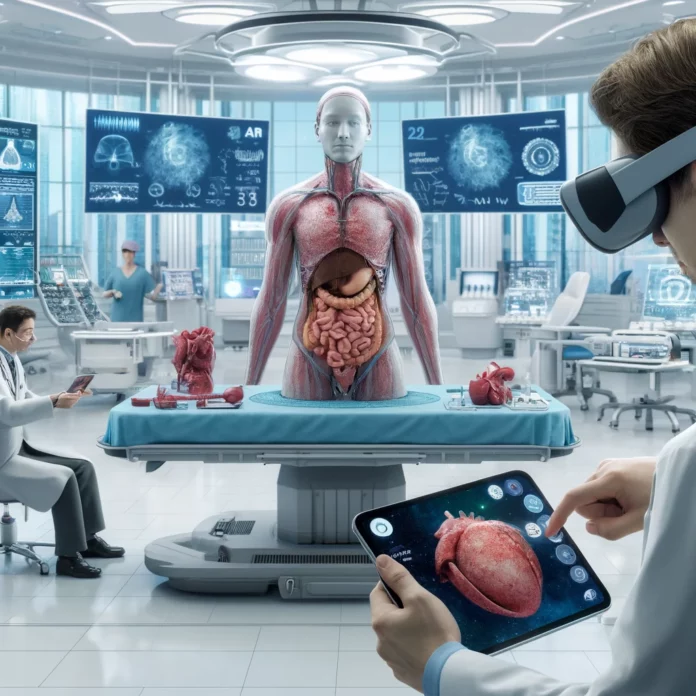
Augmented reality in rehabilitation
Augmented reality (AR) is derived from virtual reality (VR). AR integrates digital elements like images or 3D objects into the real world, while VR creates a fully computer-generated environment isolated from the real world. In physiotherapy, AR is mainly used for cognitive and motor rehabilitation. It serves as a complement to physiotherapy, creating an environment that is familiar to the patient and, thanks to digital objects and elements simulating real situations, also more enjoyable. Through 3D objects, it enables better orientation in exercises, and its use in rehabilitation yields better results than merely repeating exercises and movements (Vinolo Gil et al., 2021).
AI for cognitive and psychological recovery
In the process of rehabilitation and recovery, it is not only about healing injuries and restoring motor skills, but also about restoring psychological well-being, as the psychological state of an athlete is just as important for achieving results as their physical condition. AI applications can determine a patient’s psychological state through the analysis of facial expressions, speech patterns, and behavior. AI-driven applications can recognize early signs of depression that could slow down the entire rehabilitation process. Upon identifying such factors, a consultation with a professional psychologist is recommended. Providing psychological support together with physical rehabilitation ensures that the patient receives comprehensive care, which optimizes the entire rehabilitation process (DigitalDefynd, 2024).
Discussion
In this chapter, I will focus on a critical analysis of the key findings presented in the previous chapters – Collection of biomechanical and physiological data, Training optimization, Injury prevention and Rehabilitation. I will summarize the results, discuss their integration into sports medicine, outline the limitations of this paper, consider ethical aspects, and highlight areas for future follow-up research.
Interpretation and synthesis of key findings
The integration of artificial intelligence represents an essential change in sports medicine. It brings a shift from subjective, experience-based assessments to data-driven predictive modeling powered by continuous data collection from wearable technologies. This shift enables the personalization of training and rehabilitation, allowing an effective move away from the traditional one-size-fits-all approach to maximize an athlete’s potential. The efficiency of deep learning algorithms such as CNNs and RNNs allows the detection of subtle signs preceding injuries in both spatial movement mechanics and temporal physiological data, which facilitates the proactive implementation of measures in real-time. It is important to emphasize that AI should serve as a supportive tool for the work of clinical professionals, not as means to completely replace them.
Ethical considerations
Expanded deployment of AI in sports medicine, however, requires strict ethical control primarily focused on the collection of highly sensitive biometric and physiological data. The potential risk of data breaches and subsequent misuse necessitates the implementation of robust, anonymized data handling protocols and clear governance frameworks to protect athletes’ privacy. To ensure fairness and prevent unequal treatment through recommendations for all sports demographic groups, it is crucial to address the issue of bias in AI model outcomes. These biases can result from training models on non-representative data. Finally, it is also important to reduce excessive reliance on black-box algorithms and maintain the role of human judgement.
Limitations of this paper
This paper, as a structured overview of external data and information sources, is primarily limited by the absence of primary data collection or empirical testing of the mentioned models. Another limitation is the high heterogeneity among developing AI tools, which restricts the possibility of definitive comparative analysis of the efficiency of different technologies.
Future research
Follow-up research could focus on correlation analysis for advanced predictive modeling in order to establish clear causal directions by quantifying interactions between factors such as training load, genetic, and cognitive factors. Future work could also concentrate on deeper research regarding AI capabilities to assess athletes’ mental load and psychological resilience in real time.
Conclusions
This paper examined the transformative impact of artificial intelligence on sports medicine, particularly in the areas of training optimization, injury prevention, and rehabilitation. The analysis confirmed a fundamental shift in practice from traditional subjective methods to objective, data-driven optimizations. This change is enabled by the continuous collection of biomechanical and physiological data through wearable technologies, which form the essential input for predictive modeling.
Key insights highlight the power of AI to facilitate personalization and maximize athlete’s potential through individual plans. Deep learning algorithms, such as CNNs and RNNs, demonstrate high efficiency in predictive modeling, successfully identifying subtle signs in movements that precede injuries, enabling immediate responses and the implementation of precautionary measures. Furthermore, AI tools serve in rehabilitation as assistive devices that enhance the precision and continuity of medical care.
Although AI undoubtedly brings significant improvements, its widespread integration reveals certain critical considerations that must be addressed for sustainable progress. Ethical issues regarding athletes’ data privacy, potential algorithmic biases, and the balance between human judgement and reliance on AI require the implementation of robust data governance frameworks. In conclusion, the integration of modern data science and AI-driven sports medicine offers unprecedented potential for optimizing athletic performance and supporting a long sports career. The ongoing development of these technologies and their implementation is crucial for maximizing athletes’ potential and setting new standards for precision, efficiency, and personalized healthcare for physically active individuals.
List of references
Asiegbu, A. (2025, July). (PDF) enhancing athletic performance: Emerging role of Artificial Intelligence in sports training. International Journal of Research Publication and Reviews. https://www.researchgate.net/publication/397364666_Enhancing_Athletic_Performance_Emerging_Role_of_Artificial_Intelligence_in_Sports_Training
Barozai, D. K. (2024). Power of AI in sports performance analysis and athletic training. Folio3. https://www.folio3.ai/blog/power-of-ai-in-sports-performance-analysis-and-athletic-training/
Dhanke, J. A., Maurya, R. K., & Navaneethan, S. (2022, September). Recurrent Neural Model to Analyze the Effect of Physical Training and Treatment in Relation to Sports Injuries. Computational Intelligence and Neuroscience. https://onlinelibrary.wiley.com/doi/full/10.1155/2022/1359714
DigitalDefynd, T. (2024, May 8). 10 ways AI is being used in Injury Prevention & Rehabilitation [2025]. https://digitaldefynd.com/IQ/ai-in-injury-prevention-rehabilitation/
Echo, S. (2025, June 20). Artificial Intelligence in Sports Medicine: Redefining Performance, Prevention, and Recovery. Medicine.net. https://medicine.net/news/TechnologyAI/Artificial-Intelligence-in-Sports-Medicine-Redefining-Performance-Prevention-and-Recovery.html#:~:text=AI%20is%20now%20playing%20a%20central%20role%20in,clinicians%20and%20athletes%20by%20delivering%20real-time%2C%20actionable%20insights
GeeksforGeeks. (2025, July 11). Introduction to convolution neural network. https://www.geeksforgeeks.org/machine-learning/introduction-convolution-neural-network/
Guelmemi, N., Mechraoui, O., Fekih-Romdhane, F., & Bragazzi, N. (2023, August). (PDF) Injury Prevention, optimized training and rehabilitation: How is AI reshaping the field of Sports Medicine. ResearchGate. https://www.researchgate.net/publication/377463254_Injury_Prevention_Optimized_Training_and_Rehabilitation_How_Is_AI_Reshaping_the_Field_of_Sports_Medicine
Guo, Q., & Li, B. (2020, October). Role of AI Physical Education based on application of functional sports training. ResearchGate. https://www.researchgate.net/publication/346067140_Role_of_AI_physical_education_based_on_application_of_functional_sports_training
Jain, A. (2025, September 12). Ai in sports – revolutionizing training and performance. oyelabs. https://oyelabs.com/ai-in-sports-revolutionizing-training-and-performance/#Performance_Tracking_and_Analysis
Mahmood, A. (2025, August 12). The Role of AI and Wearables in Injury Prediction and Performance Optimization. Premier Journal of Artificial Intelligence. https://premierscience.com/wp-content/uploads/2025/08/5-pjai-25-971.pdf
Mataruna-Dos-Santos, L. J., Faccia, A., Helú, H. M., & Khan, M. S. (2021, January 4). Big Data Analyses and New Technology Applications in Sport Management, an Overview. ACM Digital Library. https://dl.acm.org/doi/abs/10.1145/3437075.3437085?casa_token=m1R-GMRc3e4AAAAA:c_H2RW-zgblyEF30iLa8SIGoFqs64Z3ryqCegug9lKqLvEGye0AE8uADT4FjqfFpy7s05LN2ryo_Ow
Mateus, N., Abade, E., Coutinho, D., Gómez, M.-Á., Peñas, C. L., & Sampaio, J. (2024, December 29). Empowering the sports scientist with Artificial Intelligence in training, performance, and Health Management. National Library of Medicine. https://pmc.ncbi.nlm.nih.gov/articles/PMC11723022/#sec3-sensors-25-00139
Mishra, N., Habal, B. G. M., Garcia, P. S., & Garcia, M. B. (2024, September 13). Harnessing an AI-driven analytics model to optimize training and treatment in physical education for sports injury prevention | proceedings of the 2024 8th International Conference on Education and Multimedia Technology. ACM Digital Library. https://dl.acm.org/doi/abs/10.1145/3678726.3678740
Musat, C. L., Mereuta, C., Nechita, A., Tutunaru, D., Voipan, A. E., Voipan, D., Mereuta, E., Gurau, T. V., Gurău, G., & Nechita, L. C. (2024, November 10). Diagnostic applications of AI in Sports: A Comprehensive Review of injury risk prediction methods. Diagnostics (Basel, Switzerland). https://pmc.ncbi.nlm.nih.gov/articles/PMC11592714/#sec1-diagnostics-14-02516
Pérez-Sala, L., Curado, M., Tortosa, L., & Vicent, J. F. (2023, April). Deep learning model of convolutional neural networks powered by a genetic algorithm for prevention of traffic accidents severity. ScienceDirect. https://www.sciencedirect.com/science/article/pii/S0960077923001467#sec1
Physiopedia. (2025). Robotic devices used in rehabilitation. https://www.physio-pedia.com/Robotic_Devices_used_in_Rehabilitation
Quistberg, A. D. (2024, March 20). Potential of artificial intelligence in Injury Prevention Research and Practice. Injury prevention : journal of the International Society for Child and Adolescent Injury Prevention. https://pmc.ncbi.nlm.nih.gov/articles/PMC11003389/
Rehab, P. I. (2025). Post Surgical Rehabilitation. Pros In Rehab . https://prosinrehab.com/services/post-surgical-rehabilitation/#:~:text=Post%20surgical%20rehabilitation%20is%20a%20critical%20component%20of,helping%20patients%20regain%20their%20strength%2C%20mobility%2C%20and%20functionality
Ruano, M. Á. G., Ibánez, S. J., & Leicht, A. (2020, October). (PDF) editorial: Performance Analysis in sport. ResearchGate. https://www.researchgate.net/publication/346553069_Editorial_Performance_Analysis_in_Sport
Sadr, M. M., Khani, M., & Tootkaleh, S. M. (2025, February 12). Predicting athletic injuries with deep Learning: Evaluating CNNs and RNNs for enhanced performance and Safety. ScienceDirect. https://www.sciencedirect.com/science/article/abs/pii/S1746809425002034
Suhr, M., & Keese, M. (2025, August). The role of virtual physical therapy in the management of musculoskeletal patients: Current practices and future implications. Current reviews in musculoskeletal medicine. https://pmc.ncbi.nlm.nih.gov/articles/PMC12234422/#Sec4
Vijayan, V., Connolly, J. P., Condell, J., McKelvey, N., & Gardiner, P. (2021, August 19). Review of Wearable Devices and data collection considerations for Connected Health. MDPI. https://www.mdpi.com/1424-8220/21/16/5589#B5-sensors-21-05589
Vinolo Gil, M. J., Gonzalez-Medina, G., Lucena-Anton, D., Perez-Cabezas, V., Ruiz-Molinero, M. D. C., & Martín-Valero, R. (2021, December 15). Augmented reality in physical therapy: Systematic review and meta-analysis. JMIR serious games. https://pmc.ncbi.nlm.nih.gov/articles/PMC8717132/
Warner, L. (2024, July 8). Vo2 Max: What is it and how can you improve it?. Harvard Health. https://www.health.harvard.edu/staying-healthy/vo2-max-what-is-it-and-how-can-you-improve-it
Zhang, H. (2020). Value and Development Ideas of the Application of Artificial Intelligence in Sports Training. Journal of Physics. https://iopscience.iop.org/article/10.1088/1742-6596/1533/3/032049/pdf